
Airtightness of energy efficient homes is a very interesting area. The argument goes like this. The more leaky a given home is, the more energy it needs to be heated and cooled. That’s because any air leaks means a loss of heat (winter) and a gain in heat (summer).
Some approaches to energy efficient homes seal the house as tightly as possible. To do this they use special wraps, tapes and seals at every possible opening. This adds considerable cost, and furthermore, because the house is so well sealed that the inside air cannot be safely breathed, a mechanical ventilation system is needed, often with heat recovery. As you’d expect, that adds further cost.
Australian government authorities don’t recommend such an approach; instead they suggest that house sealing aim at reducing unwanted airflow in and out of the house, but still leaving enough flows that mechanical ventilation is not required.
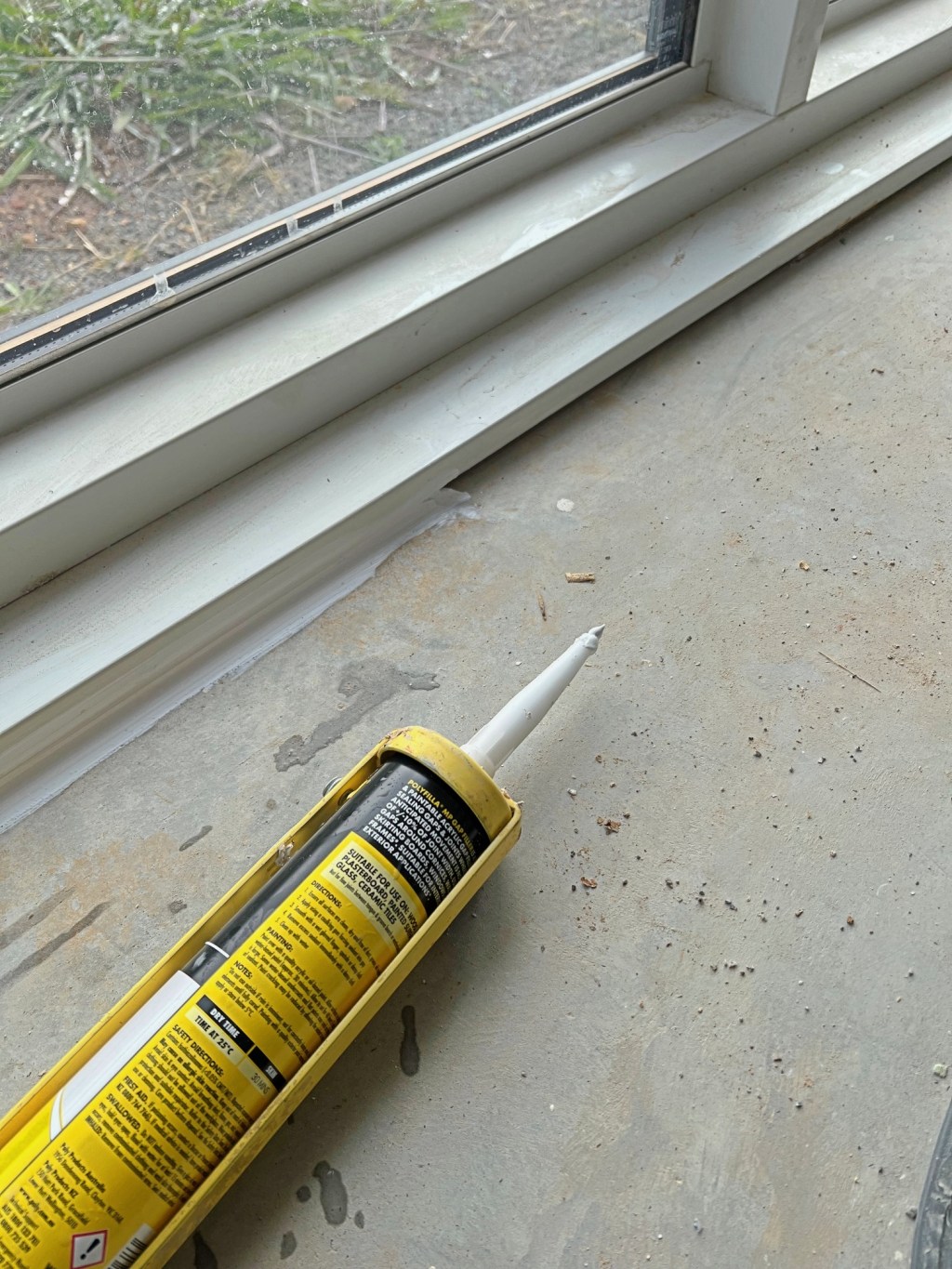
Which brings us to a very simple point. In a normal house, “correctly installed plaster becomes the main air tightness barrier for a draught-free home”. (Sustainability Victoria). To go further, if you’re trying to stop air moving in and out of a house, sealing every internal gap will largely do so. That is, have no gaps around windows, external doors, and skirting boards and cornices on the inside of external walls. And of course no gaps in the ceiling, e.g. around downlights. Furthermore, good quality construction will largely achieve this – at very little, or even no, extra cost.
To put numbers to all that, air leakage is often measured under test conditions with the house depressurised (and/or also pressurised) by 50Pa. The resulting air leakage is measured as Air Changes Per Hour at 50Pa (ACH50). Passivhaus is 0.6; the Victorian Government recommended best practice is 1.5 and excellent is 3.5 – and common figures for older houses are as high as 24!
Especially in mild climates like southern Australia, I think airtightness is one area where people start to lose the wood for the trees. Reading what some people write, you’d never think that airtightness has downsides as well as positives!
 Australian Passive Solar Home
Leave a comment