
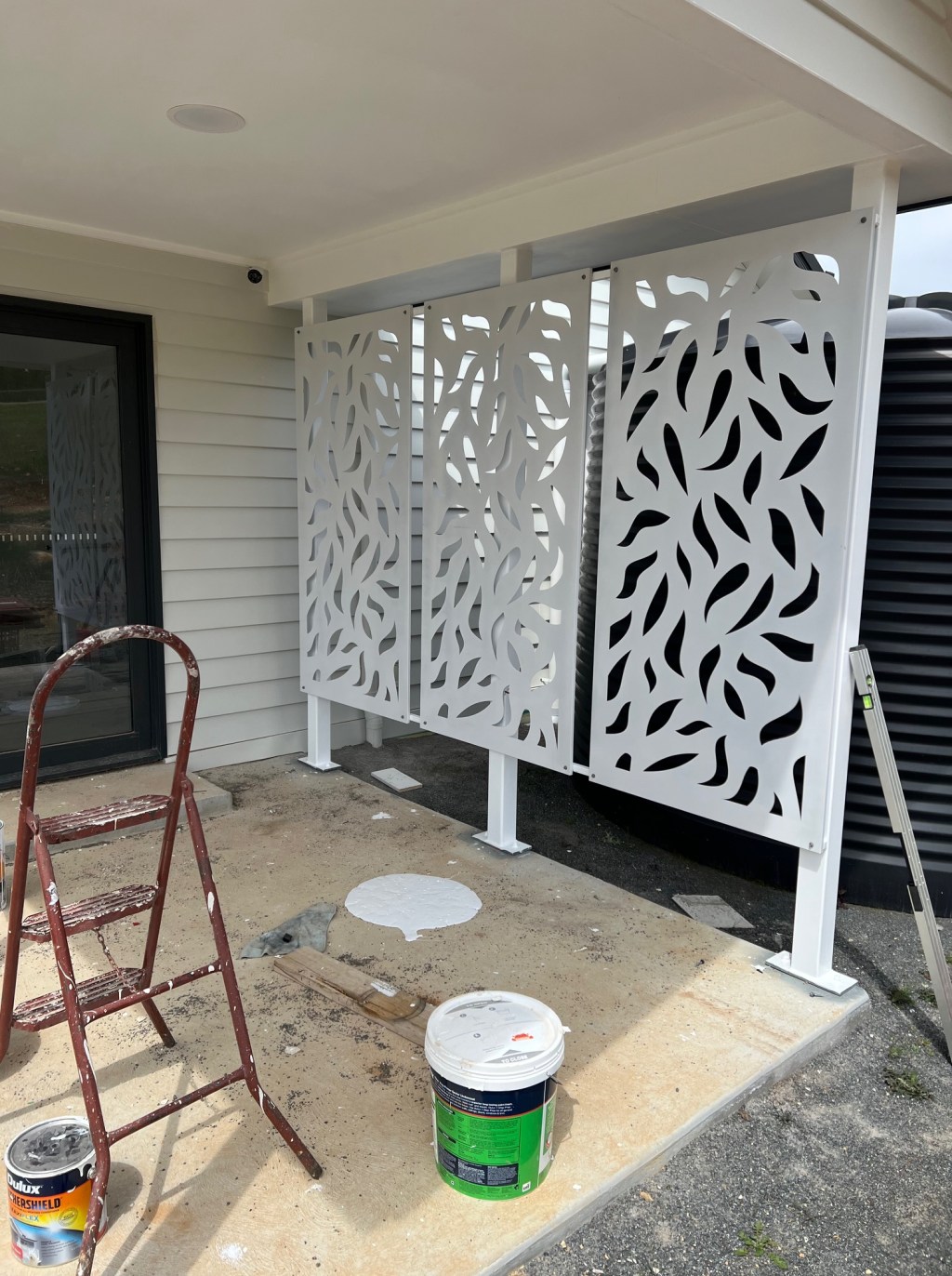
One of the interesting things about passive solar house design is shading. In our southern hemisphere, northern eaves that provide window shading in summer, but not winter, are well known. (These eaves are designed so the winter sun can penetrate the house, warming it, but the summer sun cannot.)
But what is less well recognised is east and west shading.
In summer the sun rises and sets well south of east and west, respectively. But in winter, the sun rises and sets north of east and west. So for example, in our house, that has a long axis orientated 20 degrees east of north (yes, lots of directions in this post!), the winter sun shines straight through this western door near sunset.
But we don’t want the summer sun coming in through this door, heating the house in summer. To prevent that, two shading methods are used. The first is a western overhang – a deep porch. The second shading method are these vertical screens.
As the sun sets further and further south of west in summer, these screens shade the door. (They also block the view of a rainwater tank – a key part of cost-effective passive solar design is to use the same building materials to perform multiple functions.)
I think it’s hugely rewarding to design a building to work with the movement of the sun.
 Australian Passive Solar Home
Leave a comment