
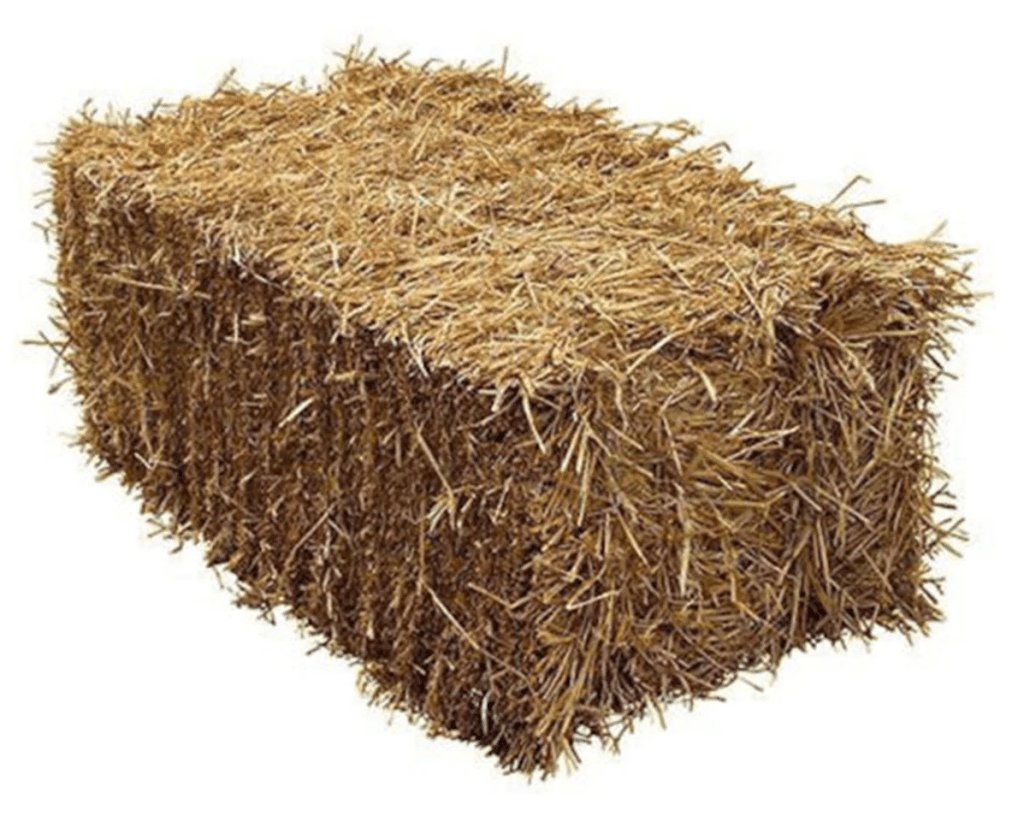
Many alternative building materials have fervent supporters. These materials include straw-bale, rammed earth, adobe and cob (sand/clay mix with added straw).
For reasons already discussed, using any of these materials to build a home will cost more than using conventional Australian building approaches. (The exceptions may be if the raw material is available at no cost and all labour is provided by the home builder. Also, an individual building element, e.g. a rammed earth interior wall for thermal mass, may be cost-effective.)
But even more important than cost is that any of these materials, if used alone, may give poor energy efficiency.
The best comparison I have seen of these materials with conventional timber frame design is in Alternative Construction (Elizabeth and Adams, 2005). In the book, comparison is made of different forms of construction in six different US climates. Various iterations of the modelling used different levels of passive solar design.
Materials modelled included straw bale, adobe and conventional timber frame. The timber frame home was additionally modelled with added interior thermal mass. Some combinations of the different materials (e.g. adobe with straw bale) were also modelled.
In all cases, the best performing houses used the alternative materials. For example, for the climate of Fresno, California, the best performing house was made from 24-inch (610mm) thick adobe walls with exterior insulation.
However, what is quite significant is that the conventional timber frame house with internal thermal mass also did quite well!
It was much the same in the other modelled climates – the very best performing houses used the alternative materials (sometimes in combination, e.g. adobe with straw bale insulation) but the conventional timber frame house with internal thermal mass continued to perform well in comparison.
States the author of this chapter: “It is unfortunate […] that many enthusiasts of alterative building materials, or straw-bale and earthen materials, see each material as a pure thing in itself. [However] the best performers in all six climates were the hybrid schemes incorporating both mass and insulation. How much mass and how much insulation depend on the climate, the target comfort zone and the amount of outside energy one wishes to waste or conserve.”
Some conclusions can be drawn. First, none of these alternative materials is a panacea – for example, a straw-bale house is not automatically warmer in winter and cooler in summer than an equally well insulated house. Second, best performance in nearly all climates came from effective passive solar design and a combination of internal thermal mass and external insulation – something that shouldn’t by now surprise us. Finally, houses using an insulated timber frame with internal thermal mass performed quite well against even the most highly optimised of the alternative forms of construction.
Straw bales are good insulators, adobe is good thermal mass, and cob is somewhere in between. But fibreglass batts are also good insulators, and concrete and brick are good thermal mass! If you choose to use alternative materials for other reasons, e.g. to reduce embodied carbon, remember that the fundamentals of orientation, shading, insulation and internal thermal mass all still apply.
There’s no magic in these alternative materials.
 Australian Passive Solar Home
Leave a comment