
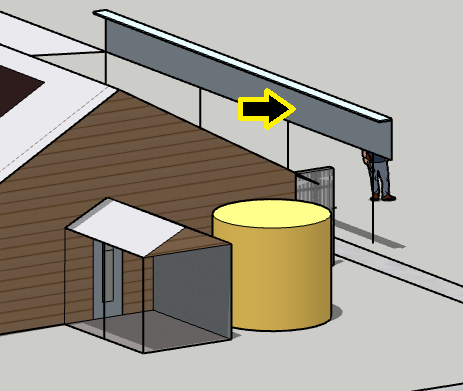
An energy efficient, passive solar house uses sunshine to heat it, and in a different way (convectional ventilation), to cool it. In the southern hemisphere, that means plenty of northern windows to let in the winter sunshine. Windows, that act as giant conductive holes in walls (yes, even good windows), are minimised on other house faces, especially to the south. But can those southern windows be used, too, to gain solar heating? Yes they can, if a reflector panel is used.
This extraordinarily simple idea came from a brilliant book I read by Derek Fuller Wrigley, a local architect who is now deceased. In the book he described how he added southern reflectors to an existing house and exclaimed how they transformed that side of the house in winter from a dark, gloomy place to one filled with sunshine and light. The trick is to place the reflectors high enough that the southern ‘sun’ angle is similar to the winter sun angle on the north – no glare, just sunshine on both sides of the house!
Wrigley added small reflectors for each window, but I have decided to use a single, long reflector panel so that there will be constant reflected sunshine through the southern windows, even as the sun moves through the sky during the day.
But what about in summer, when we definitely don’t want that sunshine coming in? Even though the summer sun, because of its higher angle in the sky, will not shine through the windows (instead, the reflected light will fall on the ground) I have decided to use an overhang on the panel so the sun, that is higher in the sky in summer, doesn’t shine on the reflector at all.
The reflector structure is yet to be built, although the concrete foundations are in place and the engineering has been done. Unless you stand right up against the interior of the window, you will not see the panel, and the posts are intended to support horizontal stainless steel cables on which a vine will grow.
As you’d expect, to cater for the reflected sunshine, I’ve gone for larger southern windows than would normally be used in a passive solar house of this design.
The southern reflector panel was one thing that I couldn’t directly model in the NatHERS energy simulation software, but what I could do was spin the house through 180 degrees and then model the changed performance of those rooms as if they faced the sun. The winter result looked good.
The reflector panel is probably the single most expensive ‘solar house’ addition to the design (although still only a tiny percentage of total build cost), so it will be very interesting to see how well it works!
 Australian Passive Solar Home
Leave a comment