
We’re very familiar with being heated by radiation – sunshine. If we stand outside in a sheltered position on a cold day, but we’re in direct sunshine, we will feel warm. We are being heated by the sun’s radiation. This is visible light – what is called shortwave radiation. As we have seen on this blog, direct sunshine is also very useful in heating the interior of a passive solar house.
However, most radiative heat exchange between people and their environment does not involve shortwave radiation. Instead, the heat exchange occurs through long wave radiation, which is not visible to our eyes. (This is obvious: we don’t emit light, and nor do the walls and floor around us!)
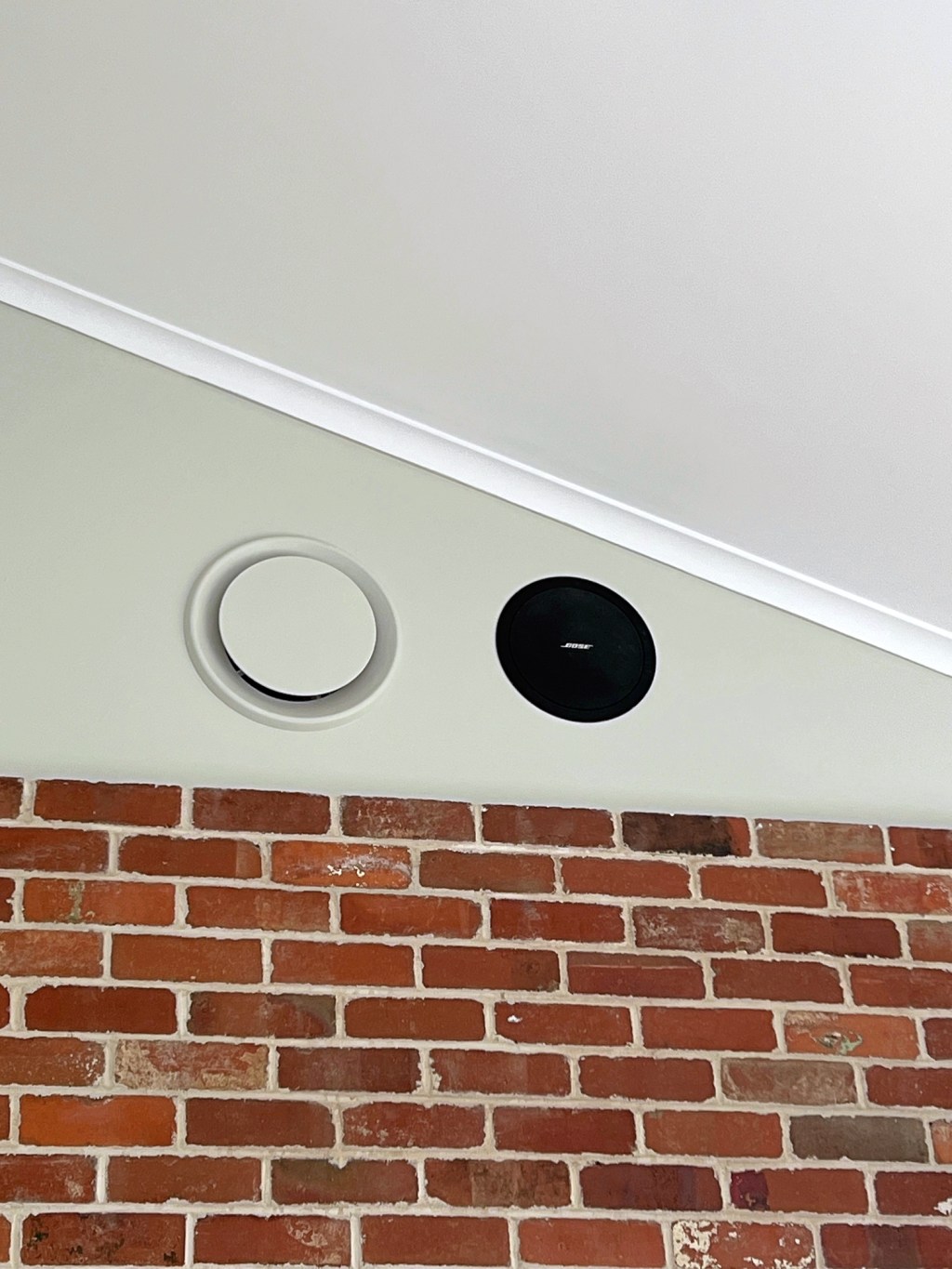
Let’s take the case of a hot day. We come inside to the cooler house – the walls are cool (especially ones like brick feature walls, above), the floor is cool and (perhaps) the ceiling is cool. Our body radiates heat to those cold surfaces, so making us feel cooler. To achieve this, our body cannot all be insulated by clothing; it needs exposed skin area.
As I have become old, I have noticed how effective my head, now devoid of most hair, is at exchanging radiative heat with nearby cooler surfaces. Having a cool head on a hot day is nice!
But what about in winter – how do we exchange heat with warm surfaces around us? Warm surfaces reduce the radiant heat transfer, enabling the person to retain their own heat (i.e. radiate less) and so feel warmer. I now wear head coverings in winter far more than I once did – it reduces radiative heat loss.
An example of how radiative heat transfer impacts comfort is where a house has windows that insulate poorly. Standing near a closed window on a cold day, you can ‘feel the chill’. What is happening was that your body is radiating heat to the cold surface of the glass.
Once you start thinking about radiative heat transfer, you can picture many situations where you have felt it but couldn’t then name it.
Having surrounding surfaces that are cooler than you are (summer), or warmer than internal ambient temperature (winter), make a very substantial difference to comfort levels inside a house.
 Australian Passive Solar Home
Leave a comment