
I have a lifelong interest in passive solar home design. I began making solar heaters when I was 14 years old, and about that time also started reading about solar homes. The house covered on this site reflects that long interest.
However, importantly, it also reflects the real-world constraints of cost, gaining planning approval and ease of building the house.
Many radical ideas were considered before being discarded because of expense, the likelihood that planning approval would become difficult, or finding appropriate tradespeople and suppliers was going to cause problems. The resulting house was simple to build, had only a very small (about 8 percent) cost increase over any other house of a similar size (and this cost increase could easily have been made zero with a few minor trade-offs), and used completely conventional local construction techniques.
That summary is not nearly as dramatic as I would have once pictured I’d build, but it was achievable!
However, having said that, the house has several unusual design aspects including:
• a passive/active convective ventilation system
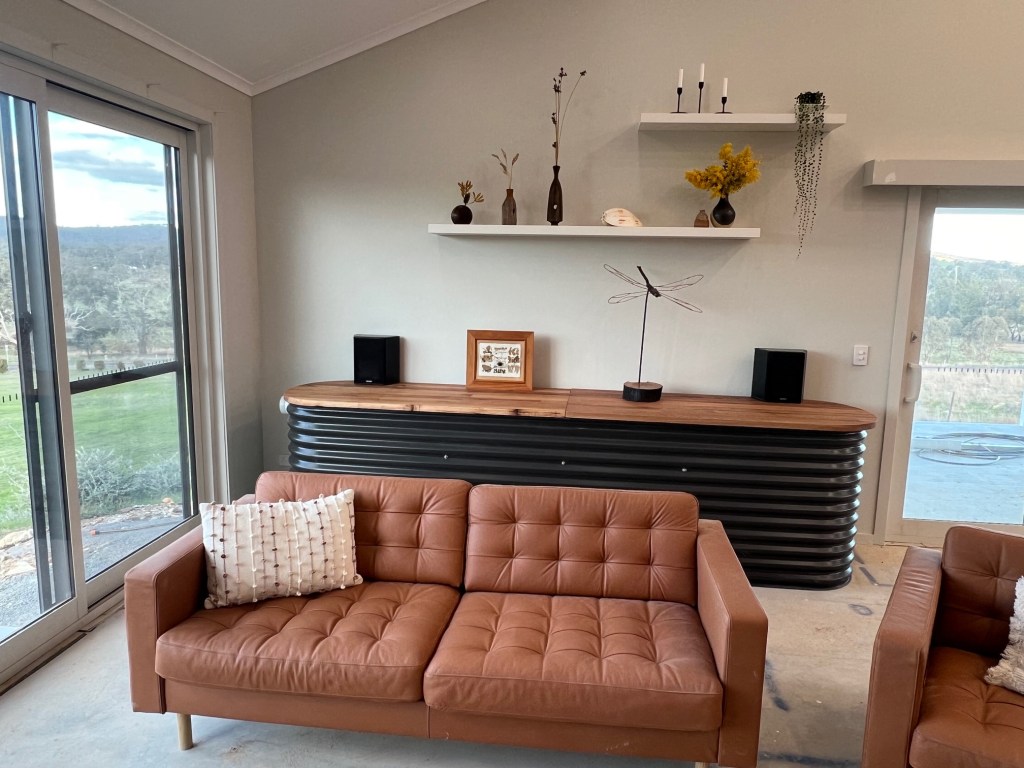
• internal water tanks to store heat and cool
• an external sunshine reflector panel
• extensive electronic logging and display of temperatures and other environmental factors
I built the house acting as an Australian owner/builder. That means I was legally responsible for every aspect of the build, but it doesn’t mean that I physically performed each step. Tradespeople who were employed included concreters (slab and foundations), carpenters (frame errection, cladding, roofing, window installation and doors), plumbers, an electrician, plasterers and a tiler.
The timber wall frames and roof trusses were fabricated offsite by a specialist company.
I did aspects like the deck and reflector steelwork (helped by my son), installed the storm water plumbing, constructed and installed the ventilation hatches, designed and installed the data logging system, installed the insulation, did the interior and exterior painting, and other assorted tasks.
In this house there are no hidden costs – for example, special expensive windows, or unusual wall construction to cater for thick insulation. It’s an absolutely straightforward house – that just happens to perform extremely well!

Summary house specifications
- 150mm thick concrete slab floor with two layers of steel mesh reinforcement, multiple deep cast-in pillars at one end, R2.3 edge insulation.
- Standard 90×35 pine wall frames.
- Mix of scissor, loft and standard pine roof trusses.
- R5 ceiling insulation (doubled in rooms with raked ceilings), R2.7 wall insulation, standard vapour permeable membrane on exterior of walls
- Roof Anticon R1.3 insulation, light coloured Colorbond roofing sheets.
- Thermally broken, double glazed windows and sliding doors, U values of 3.05-3.21 and SHGC values of 0.43-0.52
- Hardie Linea exterior wall cladding
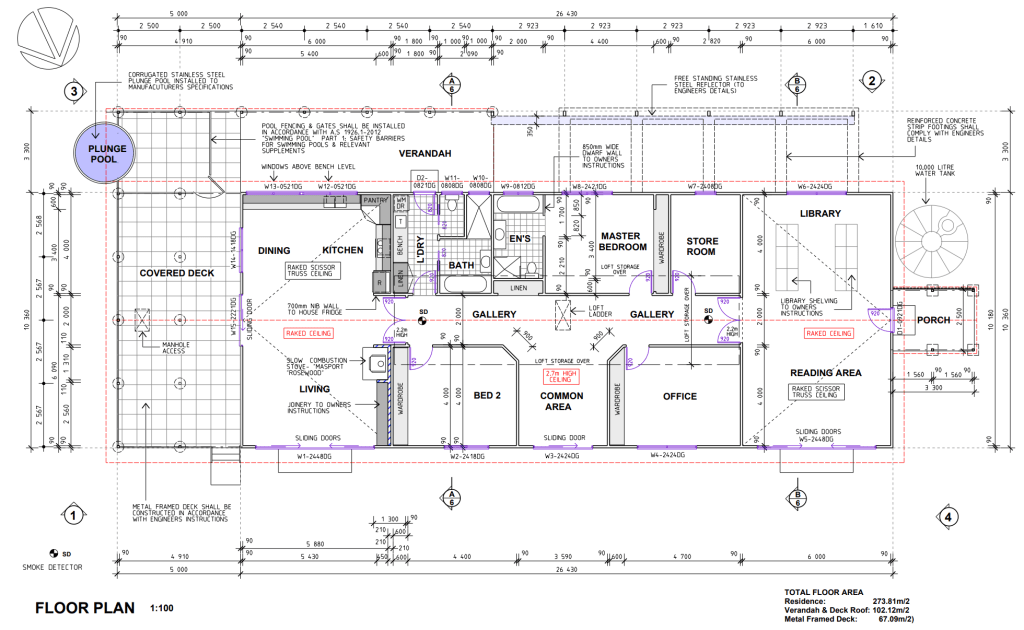
- Rectangular plan form house with extensive northern glazing, limited eastern glazing shaded by a 5-metre deck overhang, very limited western glazing (a door) shaded by a porch and southern screen, southern glazing limited in area unless illuminated in winter by a freestanding southern reflector panel (yet to be built).
- Increased interior thermal mass provided by brick feature walls and two internal 2000 litre steel water tanks, one at each end of the house, plus a further 375 litre tank in the home office.
- 600mm wind and brushless DC motor powered roof ventilator working in conjunction with electrically openable ceiling vents.
Note: All house construction used standard, off-the-shelf materials supplied by local building supply companies. The main house construction was by local trades. I built the opening ceiling hatches from commonly available materials.
 Australian Passive Solar Home